Fort Bend Tree Guide
Best Shade Trees for Fort Bend County
Compare five shade-tree candidates for Fort Bend County and learn how mature size, drainage, utilities, roots, and planting depth should shape your choice.
- Fort Bend County service territory
- Written scope for comparison
- Coverage confirmed per request
Quick Guide Summary
Start with source-backed guidance and the actual property condition
Quick answer: There is no single best shade tree for every Fort Bend County yard. Live oak, cedar elm, bald cypress, Shumard oak, and Texas redbud are useful candidates to compare, but the right choice depends on available space, sun, drainage, soil, overhead and underground utilities, and the canopy size you can accommodate at maturity. Use the Texas A&M Forest Service Texas Tree Selector to check candidates for the county and planting site before buying.
A tree selected for fast shade can become a costly mismatch if its mature crown, roots, moisture needs, or location conflict with the property. This guide narrows the decision without promising that any species will thrive in every yard or withstand every storm.
Guide Step 01
Start With the Planting Site, Not the Tree Name
Before comparing species, measure the usable planting area and look above, below, and around it. Record:
- the distance to the house, garage, fence, driveway, sidewalk, pool, and neighboring property;
- the location of overhead lines and known underground utilities;
- whether the site stays wet after rain or dries quickly;
- the hours of direct sun;
- the width and height available for a mature crown; and
- whether the goal is broad shade, seasonal color, screening, or a smaller ornamental canopy.
Texas A&M Forest Service says appropriate species, correct planting depth, and proper irrigation all affect establishment. Its tree planting guidance identifies planting too deep, improper watering, and girdling roots as common causes of poor establishment or death.
Call 811 before digging so underground utilities can be marked. A nursery container is temporary; choose for the tree’s mature form rather than its size on purchase day.
Guide Step 02
Five Shade-Tree Candidates to Compare
This is a shortlist for further site-specific research, not a ranking or planting prescription.
Live oak
Live oak can form a broad, spreading canopy and remain a major landscape tree for a long time. That same spread makes placement important. A small setback beside pavement or a building may not provide enough room for the mature crown and root zone. If an oak is selected, future pruning also carries Texas oak-wilt timing considerations; see when to trim oak trees in Texas.
Cedar elm
Cedar elm is a Texas native worth comparing for a medium-to-large shade-tree location. Check the expected mature dimensions in the Tree Selector and allow room for the crown rather than relying on repeated size-control pruning. Soil drainage and available rooting area still matter even when a species is generally adaptable.
Bald cypress
Bald cypress is a deciduous conifer often considered where the site has more moisture than a typical upland planting spot. Do not infer that a periodically wet yard is automatically suitable: determine how long water stands, whether the site also becomes very dry, and whether the mature tree has adequate clearance.
Shumard oak
Shumard oak is another large-canopy candidate. It needs a location sized for a mature oak, not a narrow strip beneath utility lines. Confirm site and county suitability in the Texas Tree Selector, and plan around the same sourced oak-pruning precautions that apply to other susceptible oaks.
Texas redbud
Texas redbud is useful to compare when the site calls for a smaller flowering tree rather than the broad canopy of a live oak or Shumard oak. Its smaller scale can fit some constrained landscapes better, but it will not deliver the same amount of mature shade as a large-canopy tree. Match expectations to the actual planting goal.
Guide Step 03
Compare the Tradeoffs Before You Buy
| Decision factor | What to verify |
|---|---|
| Mature size | Expected height and crown spread, plus clearance from buildings, roads, fences, and neighboring property |
| Utility conflict | Whether branches could grow into overhead lines and whether marked underground utilities limit digging |
| Drainage | How quickly water leaves the planting area after rain and whether the site experiences prolonged wetness |
| Sun exposure | Whether the species and the exact spot have compatible light requirements |
| Rooting area | Whether roots have usable soil volume rather than a narrow, compacted strip surrounded by pavement |
| Maintenance | Leaf, seed, fruit, flower, or cone drop and realistic future pruning needs |
| Shade goal | Large eventual canopy versus a smaller ornamental tree with lighter shade |
Do not choose solely because a tree is labeled “native,” “drought tolerant,” or “fast growing.” Those labels do not settle mature size, establishment watering, drainage, storm exposure, or property conflicts.
Guide Step 04
Planting Depth and Early Care Matter
Texas A&M Forest Service advises digging a broad planting hole, keeping the root flare at or slightly above grade, and avoiding a hole deeper than the root ball. Its guidance also warns against circling or girdling roots and explains that watering must respond to site and weather conditions.
Three practical safeguards follow:
- Find the root flare before setting the tree in the hole.
- Keep mulch away from direct contact with the trunk rather than piling it into a volcano.
- Check soil moisture instead of watering by a fixed calendar without regard to rain or drainage.
This page does not provide a universal irrigation quantity. Tree size, soil, weather, drainage, and establishment stage change the need. Use the Forest Service planting resource and guidance from the nursery supplying the exact tree.
Guide Step 05
Plan Around Existing Trees and Future Work
A new tree should not be positioned where an existing tree, structure, utility, or access route makes its mature footprint unrealistic. If an existing tree is being considered for removal, settle that scope before deciding exactly where a replacement should go.
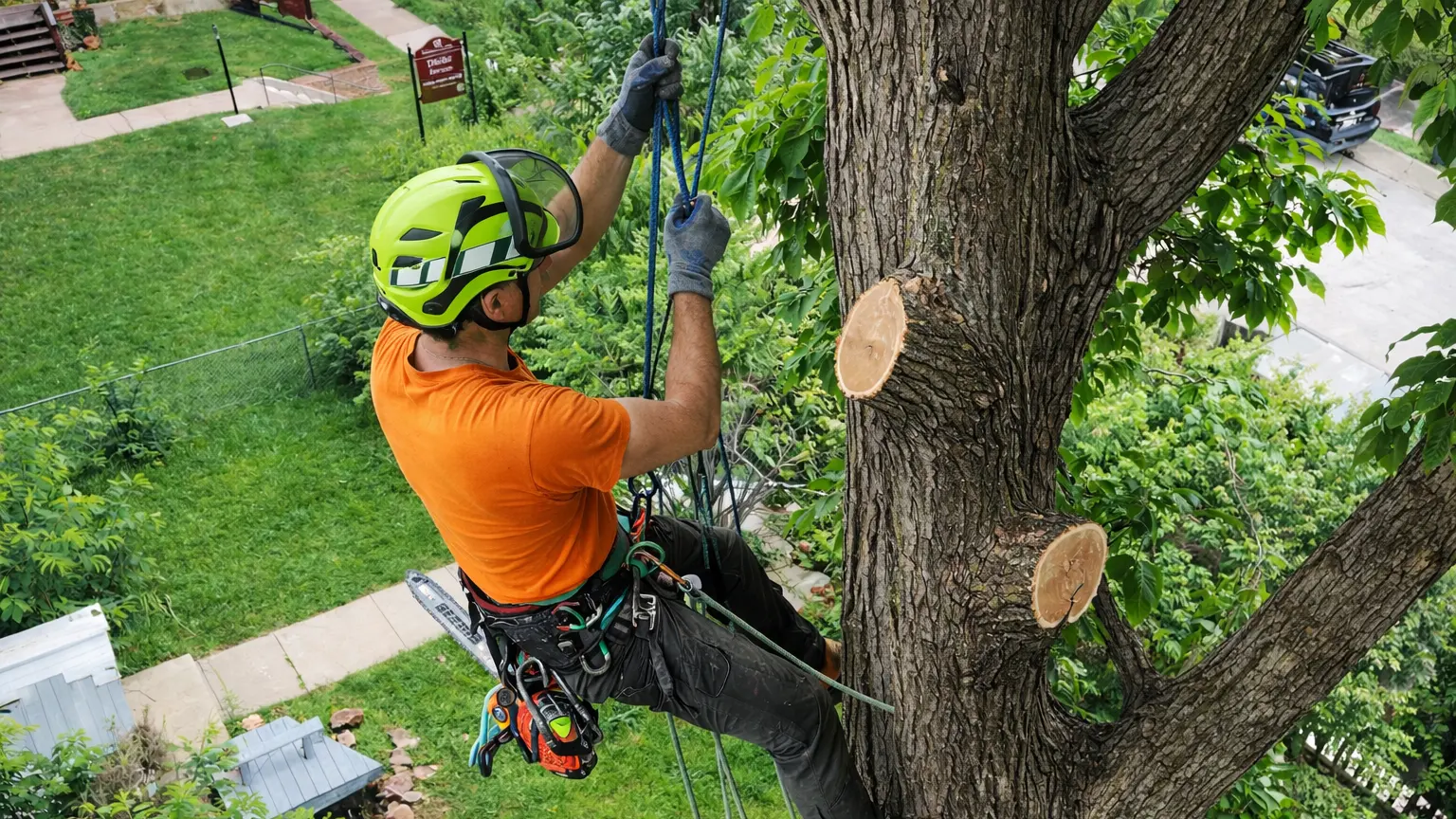
Fort Bend Tree Pros is not represented here as a landscape designer, tree nursery, planting contractor, or arborist. For an eligible property, the business may receive requests for tree removal, tree trimming and pruning, or stump grinding, subject to confirmed coverage, scheduling, and written scope. The tree removal cost guide can help compare proposals when removal is part of a larger yard plan.
Prepare Once, Compare Better
Turn the property details into a clearer first conversation
Share the private service location, what you can observe safely, nearby property or access constraints, and the outcome you want to discuss. A written scope should define inclusions, exclusions, timing, and how changes are approved.
- Use one description for every estimate request.
- Photograph only from a safe location.
- Identify utility, public-area, and access concerns early.
- Compare the proposed result—not the total alone.
Prefer to call? (281) 953-6277
Common Questions
Practical guide questions
Use these answers as a starting point, then confirm the exact property, responsibility, and written scope.
What is the best shade tree for a Fort Bend County yard?
There is no universal winner. Live oak, cedar elm, bald cypress, Shumard oak, and Texas redbud are candidates to compare, but mature space, drainage, sun, utility clearance, and the amount of shade desired should decide the shortlist.
Which tree works best in a small yard?
A smaller tree such as Texas redbud may fit some constrained sites better than a large oak, but the exact mature dimensions and clearances still need to be checked. “Small yard” alone is not enough information to select a species.
Can I plant a shade tree under a power line?
Avoid choosing a tree whose mature height or crown will conflict with an overhead line. Use the mature dimensions in the Texas Tree Selector, call 811 before digging, and contact the actual utility when its line-clearance rules need clarification.
Does Fort Bend Tree Pros plant or select trees?
No planting, nursery, landscape-design, or arborist service is approved for this page. Fort Bend Tree Pros may receive estimate requests for tree removal, trimming and pruning, stump grinding, and eligible emergency tree work.
Request a Scope-Based Estimate
Request a Written Scope for Approved Tree Work
Describe the visible concern and intended outcome. Fort Bend Tree Pros will confirm service-area coverage and whether more information or an on-site review is needed before the written scope and price are finalized.