Start Here
Fort Bend Tree Pros provides tree removal, tree trimming and pruning, stump grinding, and emergency tree service for eligible Sugar Land properties, subject to location and scheduling. Before a private-property estimate is requested, identify whether the concern belongs to the property owner, affects a public right-of-way, or involves a utility line.
Request an estimate or call (281) 953-6277 with the property location and the tree, limb, stump, or storm condition that can be described safely.
Local Service Guidance
Begin With Responsibility, Not Just the Nearest Trunk
A tree near a sidewalk, street, curb, intersection, drainage feature, property line, or utility corridor can involve more than one party. Its branches may start on private property and extend into a public area. A fallen limb may block access but also rest near a line. Before private work is scoped, establish where the tree stands, what area it affects, and who has authority to act.
The City of Sugar Land’s tree-trimming guidance says residents and business owners must trim their trees when public rights-of-way are affected, connecting that responsibility to clearance for large vehicles and traffic-safety visibility. This official guidance is a useful starting point, but Fort Bend Tree Pros does not decide legal responsibility or guarantee ordinance compliance. Property owners should review current city requirements when a tree affects public space.
Use this sequence to sort out the first call:
| Location or condition | Who to contact first | Private-service question |
|---|---|---|
| Tree is clearly on private property and away from utility lines | A tree-service provider | Which service and written scope fit the concern? |
| Private tree extends into a public right-of-way | Review Sugar Land guidance and clarify the owner’s responsibility | What private-property trimming can be properly estimated? |
| Tree appears to stand in city-controlled space | The applicable city department | Is any separate private-property work needed? |
| Limb or tree touches or rests near a power line | The actual electric utility; 911 for immediate danger | Discuss private work only after the electrical hazard is made safe |
| Boundary or ownership is uncertain | Resolve the boundary and responsibility question | Do not schedule work until authority is clear |
A Sugar Land address does not imply that Fort Bend Tree Pros has an office, storefront, crew base, or neighborhood project history in the city. Coverage and scheduling are confirmed for the specific request.
Local Service Guidance
Four Services, Four Different Property Decisions
The city hub owns Sugar Land service-and-city searches at launch. The goal is to help a property owner choose among the four verified services without creating separate, overlapping local pages.
Removal When the Whole Tree Is the Question
Tree removal in Fort Bend County is the relevant starting point when a whole tree is being considered for removal or has already fallen. Visible reasons to start the conversation may include a concerning lean, serious storm damage, a split trunk, extensive crown loss, or a dead tree. These signs can justify timely attention, but a written description or photograph is not a diagnosis and does not prove that removal is always required.
A Sugar Land removal estimate should identify the exact tree, its position on the property, nearby structures and boundaries, site access, and any public-right-of-way or utility issue. It should make exclusions clear. Equipment, debris handling, hauling, cleanup, and restoration should never be inferred from the service name; ask for any important item to be written into the proposed scope.
Trimming With a Defined Purpose
Tree trimming and pruning in Fort Bend County can address broken or dead limbs, branch clearance, overgrowth, and work intended to improve structure. In Sugar Land, the purpose may include a private tree affecting a right-of-way, but the current city guidance should be checked before the scope is set.
The Texas A&M Forest Service explains that every pruning cut creates a wound. That makes the “why” behind each cut important. A useful request identifies the limbs involved, the obstruction or clearance concern, recent storm damage, and the desired outcome. Avoid treating heavy canopy removal as a default solution. General guidance supports the decision process, while the needs of a specific tree require an appropriate on-site assessment.
Grinding a Stump Without Assuming the Finish
Stump grinding in Fort Bend County is a separate scope for a remaining stump. The estimate depends on more than the stump’s visible diameter. Access to the work area, nearby pavement or structures, visible roots, underground-risk questions, and the property owner’s plan for the area should all be discussed.
The phrase “stump grinding” does not automatically include complete root removal, a particular depth, removal of grindings, soil replacement, or final surface restoration. Ask the written estimate to describe those items. Clear assumptions are especially helpful when the area will be used for lawn, planting, a walkway, or another planned purpose afterward.
Emergency Help for Fallen Trees and Blocked Access
Emergency tree service in Fort Bend County covers requests involving fallen trees, broken limbs, storm damage, and blocked access. Service availability and timing must be confirmed. This page does not promise round-the-clock, same-day, or guaranteed response.
If a line is down or a tree is touching electrical infrastructure, stay away. Electricity can travel through tree limbs and nearby objects, so direct contact with the wire is not required for injury. Contact 911 for an immediate threat and notify the property’s actual utility. Fort Bend Tree Pros does not perform utility-line work. Likewise, do not stand under suspended limbs or enter a damaged area to collect better photos.
Local Service Guidance
How to Describe a Trimming Request Clearly
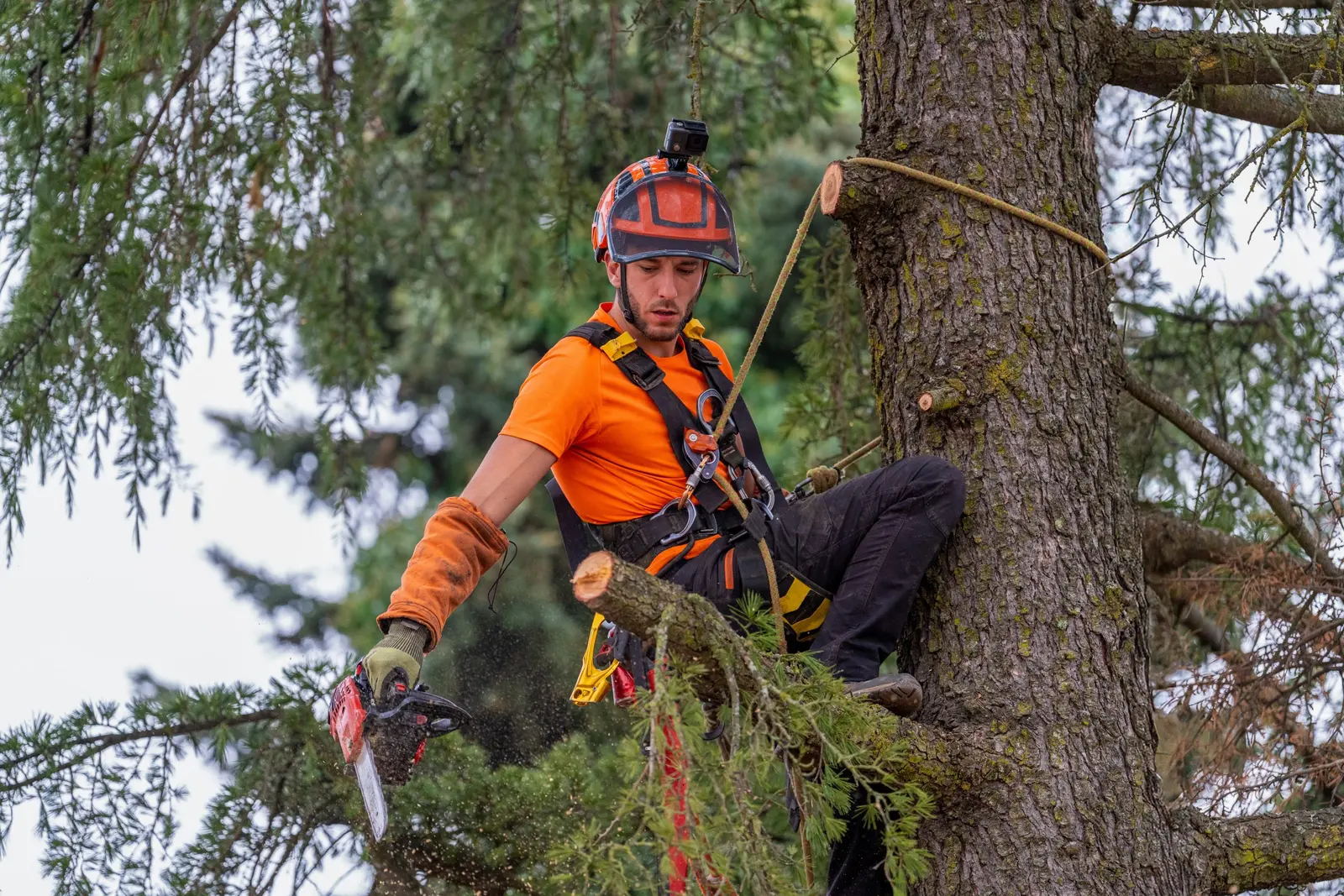
Trimming requests often become vague because “overgrown” can mean several different things. The initial request is more useful when it explains the observable conflict:
- a branch is broken, dead, or hanging;
- growth is obstructing access or visibility;
- limbs are too close to a roof, building, fence, driveway, or other feature;
- a private tree affects a sidewalk, curb, street, or other right-of-way area;
- storm damage changed the crown or branch structure; or
- selective pruning is being considered to address a specific structural concern.
Ask what branches or areas are included and what outcome the proposed cuts are intended to achieve. If the concern involves Sugar Land’s right-of-way rules, verify the current city requirement rather than assuming that a private provider can determine the owner’s legal obligation. If an overhead line is involved, route the electrical issue to the utility first.
Local Service Guidance
A Written Scope Makes Estimates Comparable
A price is hard to interpret when proposals describe different work. A useful written estimate should identify:
- The exact tree, limb, or stump. Avoid a general reference when several trees are near one another.
- The planned service. State whether the proposal concerns whole-tree removal, selective pruning, stump grinding, or emergency work.
- Property and access conditions. Note gates, fences, structures, hardscape, boundaries, and other constraints that affect the scope.
- Public and utility boundaries. State whether city guidance or utility coordination must be resolved first.
- Included and excluded tasks. Ask specifically about cut material, debris, grindings, roots, depth, and surface condition when those details matter.
- Schedule and payment terms. Rely on what is written rather than assuming availability or timing.
- How changes are handled. Additional work and price changes should be documented before they are approved.
This checklist does not promise that every listed item is included. It helps a property owner request enough detail to compare proposals on like terms.
Local Service Guidance
After a Storm: Separate Immediate Safety From the Tree Decision
Storm damage can make a property look urgent even when the long-term decision is not yet clear. First, keep people away from downed lines, suspended limbs, unstable trees, and damaged structures. Report immediate public hazards or electrical issues to the appropriate authority. Then identify whether a fallen tree or limb is blocking access and whether a private-property emergency scope is needed.
Once the area is safe, avoid assuming every damaged tree must be removed. Texas A&M Forest Service guidance warns that rushed decisions can remove trees that might be saved. Health, structural damage, crown loss, wounds, remaining branches, and location all inform the next decision. Fort Bend Tree Pros does not advertise tree-health diagnosis; the service conversation should stay focused on the requested removal, pruning, stump, or emergency scope.
Local Service Guidance
Sugar Land’s Place in the Fort Bend County Service Network
The Fort Bend County service-area directory connects Sugar Land with the other approved launch hubs: Katy tree service for eligible Fort Bend County properties, tree service in Rosenberg, and tree service in Richmond. Each hub has a separate local context and does not represent an office in that city.
For service-specific guidance, use the county removal, trimming, stump grinding, or emergency pages linked above. Browse the tree services directory for a side-by-side overview. Sugar Land-specific service spokes are not being promoted at launch; this hub remains the single owner for broad and service-modified Sugar Land intent.
Local Service Guidance
Request an Estimate for a Sugar Land Property
When the concern is on eligible private property and fits the verified service scope, request an estimate or call (281) 953-6277. Share the location privately, explain the observable condition, and mention any street, right-of-way, property-boundary, or utility concern. Fort Bend Tree Pros will need to confirm coverage, scheduling, and the proposed written scope.
Common Questions
Fort Bend County tree-service answers
Frequently Asked Questions
Who is responsible for trimming a private tree that affects a Sugar Land right-of-way?
Sugar Land says residents and business owners must trim their trees when public rights-of-way are affected. Because the facts and current rules can vary, review the city’s guidance and clarify responsibility before authorizing work. Fort Bend Tree Pros does not make legal or ordinance-compliance determinations.
What tree services does Fort Bend Tree Pros offer in Sugar Land?
Sugar Land property owners can request removal of a whole tree, purposeful branch trimming and pruning, grinding of a remaining stump, or emergency help after a tree falls, a limb breaks, storm damage occurs, or access is blocked. The property location and schedule still require confirmation.
Can Fort Bend Tree Pros trim a tree that is touching a power line?
Utility-line work is not part of the verified service scope. Stay away from a tree or limb touching or near a line, contact 911 for immediate danger, and notify the property’s actual electric utility. Discuss private-property tree work only after the utility issue is made safe.
How should I compare two tree service estimates?
Compare the exact object and work included, exclusions, access assumptions, right-of-way or utility boundaries, debris or stump details, schedule, payment terms, and the process for approving changes. A lower price may reflect a different scope, so compare written terms rather than price alone.
Is emergency tree service in Sugar Land guaranteed to be available immediately?
No immediate availability or response time is guaranteed. Emergency requests cover fallen trees, broken limbs, storm damage, and blocked access, but Fort Bend Tree Pros must confirm the project location, service fit, and scheduling. Contact emergency services or the utility first when life safety or power lines are involved.