Start Here
Fort Bend Tree Pros provides tree removal, tree trimming and pruning, stump grinding, and emergency tree service for eligible Richmond properties, subject to location and scheduling. The first step is to define the concern without crossing a safety boundary: identify what changed, where the tree stands, what it affects, and whether a public right-of-way or utility may be involved.
Request an estimate or call (281) 953-6277 with the Richmond project location and a safe description of the tree, limb, stump, or storm damage.
Local Service Guidance
Turn a Tree Concern Into a Clear Next Step
The Fort Bend County cities and towns directory identifies Richmond as the county seat and places it on the Brazos River. Those geographic facts help distinguish Richmond, Texas, but they do not establish a business relationship, local office, neighborhood experience, or automatic service availability. Every property request still needs coverage and scheduling confirmation.
Start by placing the concern into one of three time frames:
- Immediate safety issue: a downed line, suspended limb, unstable tree, damaged structure, or public obstruction requires people to keep away and contact the appropriate emergency, utility, or public authority first.
- Prompt private-property concern: a fallen tree, broken limb, storm damage, or blocked access may fit emergency tree service once the area and responsibility are clear.
- Planned property work: removal, selective pruning, or stump grinding can be scoped through an estimate that states the included work and site constraints.
This framework keeps urgent hazards from being treated like ordinary estimates and keeps planned work from being described with unsupported emergency promises.
Local Service Guidance
Public Right-of-Way and Private Property Are Different Scopes
The official City of Richmond search excerpt for Street & Drainage says the department handles tree trimming on public rights-of-way as part of its maintenance responsibilities. The city page itself was inaccessible during the research run, so this point must be directly re-verified before publication. It should be used cautiously as a distinction, not as legal advice or a promise that the city will handle every tree near a street.
For now, use these boundaries:
| Where the concern appears to be | Appropriate first action |
|---|---|
| Clearly on private property | Identify the needed service and request a written private-property scope |
| Within or affecting a public right-of-way | Check current City of Richmond guidance and clarify responsibility |
| Touching or close to a power line | Keep away and contact the actual utility; call 911 for immediate danger |
| On an uncertain boundary | Resolve ownership or authority before work is arranged |
| Blocking a public route | Report the hazard to the appropriate public or emergency authority |
Fort Bend Tree Pros does not claim authority over public land, municipal work, utility lines, or legal property boundaries. Once those questions are resolved, an eligible private-property scope can be discussed.
Local Service Guidance
Match the Request to the Condition
When Removal Is Being Considered
Tree removal in Fort Bend County is the starting page when a whole tree is being considered for removal or has already fallen. A concerning lean, split trunk, extensive crown loss, apparent death, or major storm damage can justify an assessment. No single observation in this list is a diagnosis or an automatic removal decision.
The Richmond estimate should identify the exact tree, where it stands, what is nearby, and how the work area can be accessed. Structures, fences, gates, driveways, public areas, property boundaries, and utilities may change the proposed scope. Ask what happens to cut material and what condition the area is expected to be in afterward. Do not assume hauling, cleanup, particular equipment, or restoration unless the written proposal says so.
When Selective Pruning Is the Better Question
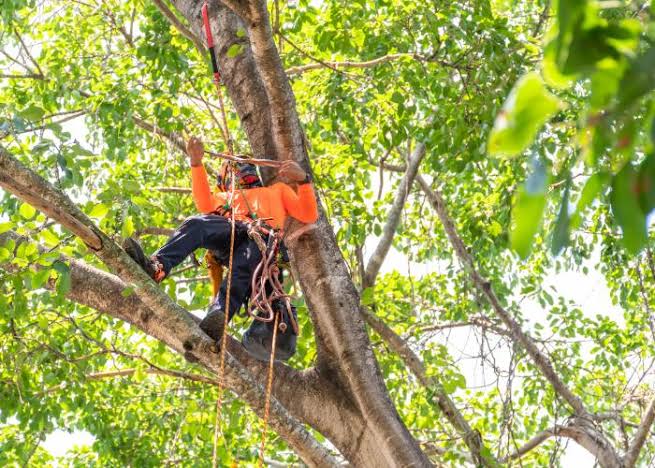
Tree trimming and pruning in Fort Bend County can address broken or dead branches, overgrowth, clearance conflicts, and purposeful structural concerns. The request should name the branch or area involved and explain the desired outcome. That gives the estimate a clearer basis than a general request to reduce the whole canopy.
Texas A&M Forest Service pruning guidance explains that every pruning cut creates a wound. It also identifies dead-branch removal, structure, risk reduction, and clearance as reasons for pruning mature trees. These are general decision principles, not a diagnosis, universal prescription, or claim that Fort Bend Tree Pros holds an unverified credential.
When pruning involves a public right-of-way, verify the city’s current role first. When it involves a line, contact the utility. Private work should not be used to bypass municipal or electrical-safety responsibilities.
When the Remaining Stump Is the Project
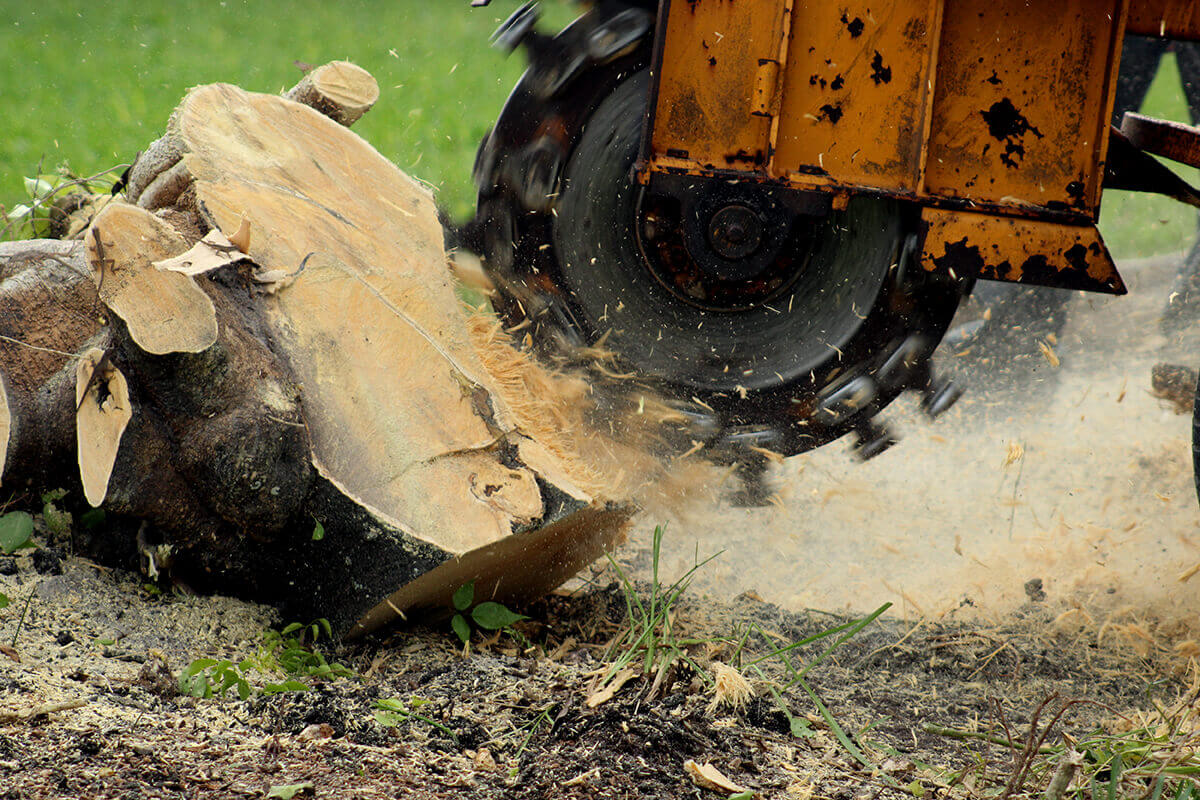
Stump grinding in Fort Bend County addresses a remaining stump that interferes with the intended use of the property or creates an unwanted obstacle. A useful request describes approximate dimensions, the access route, nearby hardscape or structures, visible surface roots, and what the property owner wants to do with the area next.
The written scope should answer practical finish questions: proposed depth, whether visible roots are included, what happens to grindings or debris, what is excluded, and the expected surface condition. Stump grinding is not a promise of complete root removal, soil replacement, grading, or lawn restoration.
When a Fallen Tree or Broken Limb Changes Access
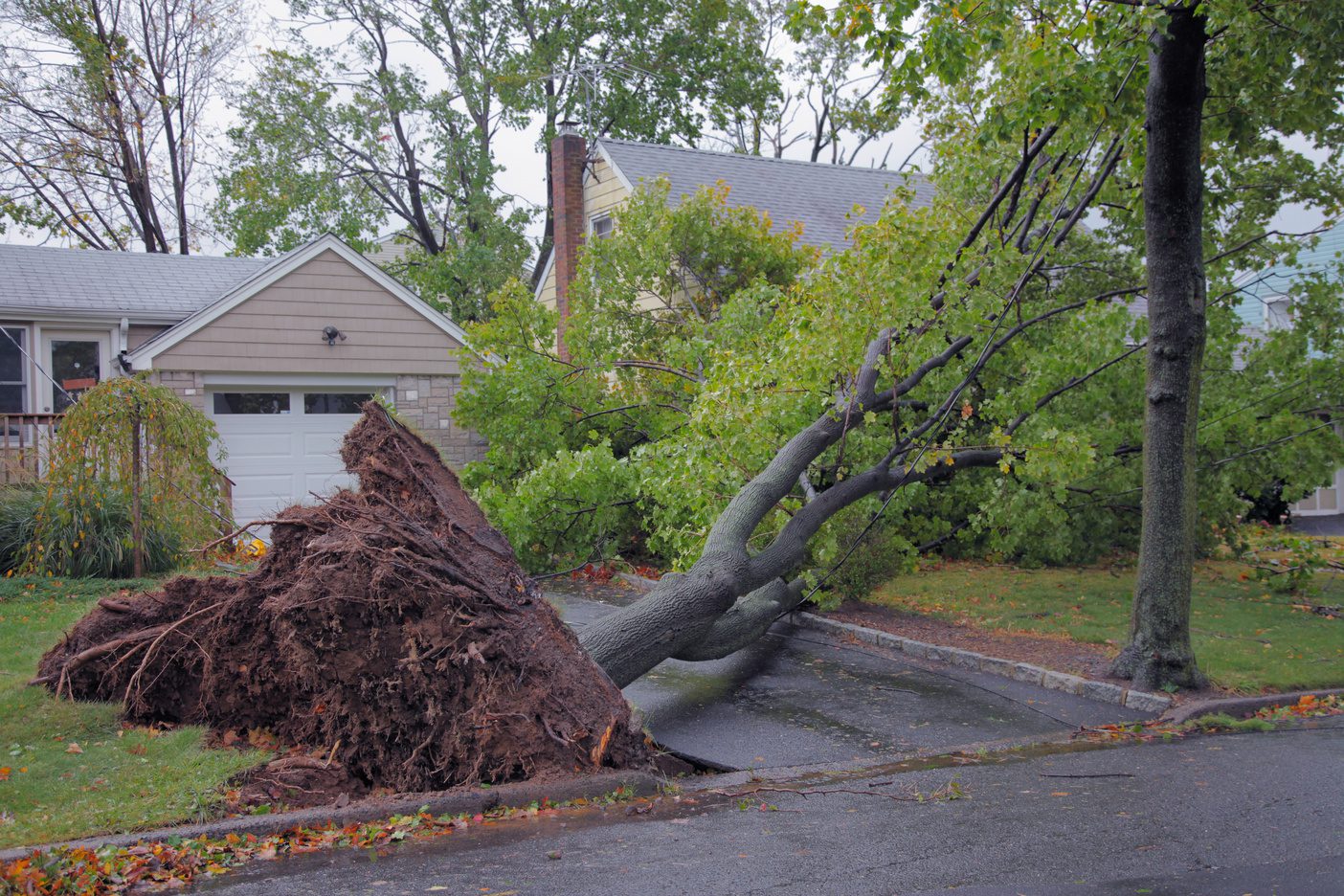
Emergency tree service in Fort Bend County is the starting point for fallen trees, broken limbs, storm damage, and blocked access. “Emergency” describes the problem category. It does not guarantee availability at every hour, same-day service, or a fixed response time.
Explain what fell, what is blocked, and whether the concern affects a structure, road, public space, or utility. Photos may help only when they can be taken from a safe location. Never stand under a hanging limb or move toward a downed line to improve the view. Coverage, timing, and scope must be confirmed.
Local Service Guidance
Safety Comes Before Documentation
A damaged tree can be dangerous even when the electrical line is not easy to see. Official utility guidance warns that electricity can travel through tree limbs and nearby objects. Treat a downed line as energized, keep people and pets away, and do not touch a tree, fence, or object that may be in contact with it. Call 911 for immediate danger and notify the property’s actual utility.
Fort Bend Tree Pros does not offer utility-line work. If a public roadway or right-of-way is obstructed, report that condition through the appropriate city or emergency channel. The private-property tree-service conversation comes after immediate life-safety, electrical, and authority questions are addressed.
If there is no immediate hazard, document only what can be observed without climbing, cutting, entering a restricted area, or standing beneath damaged material. A clear written description can be useful; a risky photograph is not required.
Local Service Guidance
Storm Damage Does Not Always Settle the Final Decision
After immediate hazards are controlled, evaluate the remaining decision carefully. Texas A&M Forest Service guidance on storm-damaged trees says some trees can recover and recommends considering health, structural damage, crown loss, wound size, remaining branches, and location. Its related storm guidance warns against hasty cleanup decisions that remove trees that might be saved.
A split trunk or extensive crown loss is a serious warning condition, but remote copy cannot determine the fate of a specific tree. The next step may be removal, selective pruning, monitoring, or another appropriate assessment. Fort Bend Tree Pros does not advertise disease diagnosis or treatment, so the estimate request should focus on the requested service and observable site conditions.
Local Service Guidance
Prepare a Richmond Estimate Request in Two Parts
Part One: Describe the Property and Responsibility
Share the project address privately so coverage can be checked. Explain whether the tree appears to be on private property and whether it is near a street, drainage area, public right-of-way, property boundary, or utility line. Note any reason authority is unclear. These facts may need to be resolved before private work is scheduled.
Part Two: Define the Work to Be Priced
Identify the exact tree, branch, or stump. State whether the desired result is whole-tree removal, selective trimming, stump grinding, or help with a fallen tree or blocked access. Describe gates, fences, structures, hardscape, and other access constraints. Ask the estimate to show:
- included work and explicit exclusions;
- the object and area covered;
- schedule and payment terms;
- any material, debris, grinding-depth, root, or surface-condition details that matter;
- assumptions about public or utility coordination; and
- how added work or price changes will be approved in writing.
This does not promise that every listed item is part of the service. It gives the property owner a consistent way to compare proposals and avoid relying on an undefined service label.
Local Service Guidance
Request an Estimate for a Richmond Property
If the concern is on eligible private property and falls within the four verified services, request an estimate or call (281) 953-6277. Provide the location, observable condition, access details, and any public-right-of-way or utility issue. Coverage, scheduling, and the proposed work must be confirmed in writing.
Common Questions
Fort Bend County tree-service answers
Frequently Asked Questions
Does Richmond handle tree trimming in public rights-of-way?
An official City of Richmond search excerpt says Street & Drainage handles tree trimming on public rights-of-way, but the original page must be reopened and verified before publication. Check current city guidance for the specific location and keep any private-property scope separate.
What tree services are available for eligible Richmond properties?
For an eligible Richmond property, the service menu covers removing a whole tree, pruning selected branches, grinding a stump, and responding to a fallen tree, broken limb, storm damage, or blocked entrance. The property, requested work, and schedule all require confirmation.
What should I do when a Richmond tree is near a downed line?
Treat the line as energized, stay away, and keep people and pets clear. Contact 911 for immediate danger and notify the property’s actual electric utility. Fort Bend Tree Pros does not perform utility-line work.
Can every storm-damaged tree be judged from a photograph?
No. Photographs can show visible damage but may not reveal structural, health, site, or ownership factors. Address immediate hazards first, then seek an appropriate assessment before deciding whether the tree should be pruned, monitored, or removed.
What makes a written tree service scope useful?
A useful scope identifies the exact tree, limb, or stump; included work; exclusions; access assumptions; public or utility boundaries; schedule and payment terms; finish expectations; and the process for approving changes. These details allow proposals to be compared on the same basis.