Texas Oak-Pruning Guide
When Should You Trim Oak Trees in Texas?
Texas A&M Forest Service advises avoiding oak pruning from February through June and painting oak wounds immediately. Learn how to plan a careful scope.
- Fort Bend County service territory
- Written scope for comparison
- Coverage confirmed per request
Verified Timing Summary
Avoid pruning oaks from February through June
Quick answer: Texas A&M Forest Service advises avoiding pruning or wounding oak trees from February through June to reduce oak-wilt risk. It also advises painting oak wounds immediately, regardless of the season. Outside that February–June period, timing is still only one part of the decision; the pruning goal, the tree’s condition, safety, weather damage, and the amount of crown being considered all matter.
This guide stays within those verified timing points. It does not name any narrower calendar period as a universally safest window. It also does not diagnose oak wilt or prescribe treatment for a particular tree.
Oak-Pruning Guide 01
Why Oak-Pruning Timing Deserves Special Attention
Every pruning cut changes a tree. Texas A&M Forest Service explains in its pruning guidance that every cut is a wound. Proper pruning can support structure and tree care goals; an unnecessary or poorly planned cut can create avoidable stress.
For oaks, the timing issue includes oak-wilt prevention. The agency’s mature-tree pruning guidance advises against pruning oaks from February through June because oak wilt can spread through pruning wounds. A dated Texas A&M Forest Service oak-wilt prevention statement repeats that February–June avoidance and says fresh wounds can be infection entry points.
The practical takeaway is simple enough to remember:
- Avoid planned oak pruning from February through June.
- Paint oak wounds immediately, no matter when the wound occurs.
Those two rules do not replace a complete pruning decision, but they establish the source-backed timing boundary for this page.
Oak-Pruning Guide 02
What “Avoid February Through June” Means in Practice
For routine work that can be scheduled, do not plan oak pruning during February, March, April, May, or June. Use the time before a proposal is accepted to identify the exact tree, the reason for each proposed cut, and whether the request can wait until outside the restricted period.
Do not convert that guidance into the opposite claim that every day outside the five-month period is equally suitable. The verified source pack for this page does not approve a narrower “best,” “safest,” or dormant-season calendar. A storm, active hazard, tree condition, and the intended pruning extent may still change the decision.
If an oak is damaged during the restricted period, safety comes first. A broken limb over an occupied area, blocked access, or storm-related damage is not the same as routine shaping. Keep people away from the drop zone and discuss the minimum safety-related response with an appropriate professional. If a power line is involved, contact 911 for immediate danger and the property’s actual electric utility; private tree work should not begin until the utility concern is addressed.
Oak-Pruning Guide 03
Paint Oak Wounds Immediately
Texas A&M Forest Service advises painting oak wounds immediately, regardless of season. This point applies to planned cuts and to fresh wounds created by damage. “Immediately” should not be diluted into “later that day,” “when convenient,” or only during February through June.
The guidance is specific to oak wounds. It should not be generalized into a statement that every wound on every tree species receives the same treatment. This page also does not add unverified tool-cleaning, firewood, chemical, or disease-treatment instructions. The published source links above are the reference points for an editor or property owner who wants the full agency context.
Oak-Pruning Guide 04
Prune for a Defined Reason
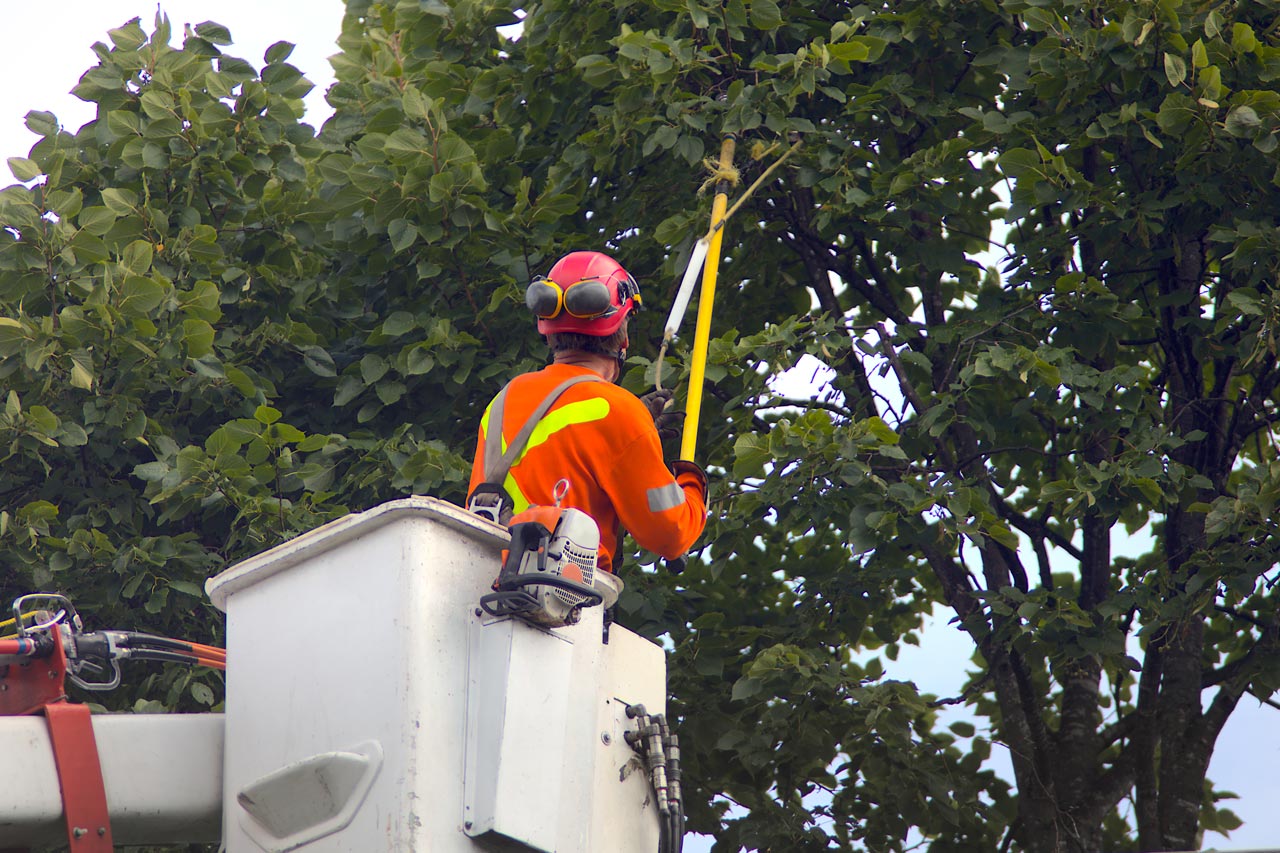
Timing does not answer why a cut is being proposed. Texas A&M Forest Service identifies removing dead branches, improving structure, reducing risk, and providing clearance as reasons mature trees may be pruned. Begin with the problem to solve:
- Is a dead or broken branch the concern?
- Is clearance needed over a structure, walk, drive, or access route?
- Did a storm create a specific damaged limb?
- Is the proposed work intended to improve structure rather than change the tree’s size for appearance alone?
- Is whole-tree removal being discussed when selective pruning may be the real question?
A written proposal should connect each important cut or pruning area to the stated goal. Avoid broad phrases such as “trim the whole tree” when the desired result can be defined more clearly.
The same Forest Service mature-tree guidance cautions against removing too much canopy and says not to remove more than 25 percent of the crown at one time. That is general educational guidance, not a target amount. It does not mean every oak should lose one quarter of its crown, and it does not determine the right scope for a specific tree.
Oak-Pruning Guide 05
Plan the Estimate Around Scope, Not a Calendar Alone
Once the request is outside the February–June avoidance period—or an urgent condition requires a safety conversation—the estimate should still resolve the work itself.
| Scope question | Why it matters |
|---|---|
| Which oak is included? | The proposal should identify the exact tree rather than rely on a whole-yard description. |
| What is the pruning objective? | Dead branch removal, clearance, storm damage, and structural goals are different requests. |
| Which limbs or canopy areas are affected? | A written description reduces disagreement about the intended result. |
| How much crown is being considered? | Excessive canopy removal can stress a mature tree; the proposed extent should be explained. |
| What property features are nearby? | Roofs, fences, walks, drives, boundaries, and access points may affect the scope. |
| Are lines or public areas involved? | Utility or municipal responsibility must be clarified rather than assumed. |
| What is excluded? | Debris, hauling, restoration, unrelated trees, and later work should not be presumed. |
| How are changes documented? | Extra work and price changes should be approved in writing before they proceed. |
This table is a buyer’s comparison tool. It is not a promise that every listed task is available or included.
The tree trimming cost guide provides a fuller framework for comparing proposals without an unverified price range. The Fort Bend County trimming and pruning page explains the approved service intent and estimate path.
Oak-Pruning Guide 06
Do Not Use Symptom Lists as a Diagnosis
Texas A&M Forest Service notes in its oak-wilt prevention statement that seasonal leaf transition can make diagnosis difficult. Browning, leaf loss, or decline may raise concern, but this page cannot determine the cause from a description or photograph.
If oak wilt is suspected, avoid making new pruning cuts to investigate. Seek appropriate diagnostic help rather than turning preventive guidance into a do-it-yourself disease conclusion. Fort Bend Tree Pros is not presented as a disease-diagnosis or treatment provider, and no credential claim is made here.
A reader who is unsure whether a tree is dead, dormant, or stressed can use How to Tell If a Tree Is Dead for a cautious observation framework. That guide also explains why leaf drop alone is not conclusive and when the concern should move from observation to safety escalation.
Oak-Pruning Guide 07
Routine Timing and Storm Timing Are Different Decisions
Routine pruning can be planned around the February–June avoidance period. Storm damage may arrive on any date. When a broken limb or damaged tree creates an immediate concern, use this order:
- Keep people and pets out of the affected area.
- Do not stand beneath hanging or broken limbs.
- Treat a downed or nearby line as energized and contact 911 for immediate danger plus the property’s actual utility.
- Observe and photograph only from a safe location.
- Explain that an oak is involved and state the date when requesting a scope discussion.
- Ask how the proposal limits work to the safety need and addresses immediate wound painting.
- Separate urgent work from later routine pruning decisions.
Fort Bend Tree Pros offers emergency response for fallen trees, broken limbs, storm damage, and blocked access, subject to confirmed coverage and scheduling. Review the emergency tree service page when that is the primary need.
Oak-Pruning Guide 08
Request a Tree Trimming Estimate
Before contacting a provider, note the property location, the oak you are asking about, the pruning goal, visible damage, nearby structures or access routes, and whether a utility line or public area could be involved. Do not climb or cut a sample to provide more detail.
For an eligible property in the Fort Bend County service territory, request an estimate for tree trimming and pruning or call (281) 953-6277. Project location, scheduling, and the written scope must be confirmed. This page does not promise that every oak or proposed task is eligible.
Prepare Once, Compare Better
Define the timing boundary and pruning goal together
Share the private service location, what you can observe safely, nearby property or access constraints, and the outcome you want to discuss. A written scope should define inclusions, exclusions, timing, and how changes are approved.
- Use one description for every estimate request.
- Photograph only from a safe location.
- Identify utility, public-area, and access concerns early.
- Compare the proposed result—not the total alone.
Prefer to call? (281) 953-6277
Common Questions
Practical guide questions
Use these answers as a starting point, then confirm the exact property, responsibility, and written scope.
What months should I avoid pruning oak trees in Texas?
Texas A&M Forest Service advises avoiding pruning or wounding oak trees from February through June because fresh wounds can be entry points for oak wilt infection.
Is there one universally safe time to trim every oak?
This guide does not name one. The verified timing guidance used here is to avoid February through June. Conditions outside that period still require a defined pruning goal, an appropriate scope, and attention to damage and safety.
Should oak pruning wounds be painted?
Yes. Texas A&M Forest Service advises painting oak wounds immediately, regardless of season. This page does not extend that oak-specific guidance to every wound on every tree species.
What if an oak branch breaks between February and June?
Keep people away from the drop zone and address immediate safety first. If pruning is necessary for a broken limb or storm condition, limit the discussion to the safety-related scope and make sure fresh oak wounds are painted immediately.
Can Fort Bend Tree Pros diagnose or treat oak wilt?
No disease-diagnosis or treatment service is approved for this page. Fort Bend Tree Pros may receive requests for tree trimming and pruning, tree removal, stump grinding, or emergency response, subject to property coverage, scheduling, and written scope confirmation.
Request a Scope-Based Estimate
Request an Oak-Pruning Scope With Timing Clearly Defined
Describe the visible concern and intended outcome. Fort Bend Tree Pros will confirm service-area coverage and whether more information or an on-site review is needed before the written scope and price are finalized.