Tree Removal Cost Guide
What Shapes Tree Removal Cost in Fort Bend County?
Learn what shapes a tree removal estimate in Fort Bend County, what to document safely, and how to compare written scopes without relying on price alone.
- Fort Bend County service territory
- Written scope for comparison
- Coverage confirmed per request
Quick Cost Summary
Start with the written removal scope
Quick answer: There is no verified one-price-fits-all range for tree removal in Fort Bend County. A useful estimate identifies the exact tree, why removal is being considered, nearby structures and boundaries, site access, utility or public-right-of-way concerns, scheduling terms, and every included or excluded task. Compare written scopes on the same facts before comparing totals.
Fort Bend Tree Pros does not publish an unverified price band. Property owners can request an estimate for an eligible Fort Bend County property after gathering the safe-to-observe details below. Coverage and scheduling must be confirmed for each request.
Cost Guide 01
Start With the Removal Decision, Not a Price Guess
A search for an average tree removal price often begins before the job is clearly defined. One request may involve a standing tree considered for removal, while another begins with storm damage, a fallen trunk, or blocked access. Those are different situations, and they should not be forced into the same estimate description.
Use the Fort Bend County tree removal page when the main question concerns removing an entire tree. Start with emergency tree service when a fallen tree, broken limb, storm event, or blocked access creates the immediate concern. If a line is down or a tree is touching a utility line, keep away and contact 911 for immediate danger and the property’s actual electric utility. Utility-line work is not part of the verified Fort Bend Tree Pros service scope.
After a storm, urgency does not always settle the final tree decision. Texas A&M Forest Service storm-damage guidance warns that rushed cleanup decisions can remove trees that might be saved. Immediate hazards come first; the keep, prune, or remove decision can follow when the area is safe enough for appropriate evaluation.
Cost Guide 02
The Details a Tree Removal Estimate Should Resolve
The most useful cost discussion is a scope discussion. Ask the estimator to address the same categories in writing so that each proposal can be compared fairly.
| Estimate question | Why it belongs in the written scope |
|---|---|
| Which tree is included? | The proposal should identify the exact tree and avoid an ambiguous whole-property description. |
| What outcome is proposed? | Whole-tree removal, storm-related access work, selected limb work, and stump grinding are different scopes. |
| What surrounds the tree? | Buildings, fences, driveways, neighboring property, roads, drainage areas, and landscaping may affect the proposed plan. |
| How can the work area be reached? | Gates, narrow approaches, soft ground, parked vehicles, and other access limits should be discussed before approval. |
| Are utility lines involved? | The utility may need to make the area safe or clarify responsibility before private tree work can proceed. |
| Is public land or right-of-way involved? | City or county responsibility should be checked instead of assumed. |
| What happens to cut material? | Debris handling, hauling, and the final condition of the work area must be stated rather than presumed. |
| Is the stump included? | Tree removal and stump grinding are separate intent owners on this site; the estimate should say whether stump work is part of the proposal. |
| What schedule and payment terms apply? | Dates, payment stages, and completion conditions should be written without relying on a verbal promise. |
| How are changes approved? | The proposal should explain how additional scope and price changes will be documented before extra work begins. |
This table is a buyer checklist, not a statement that every listed activity is included. Fort Bend Tree Pros has not published a blanket promise about equipment, hauling, cleanup, stump work, root work, restoration, or response time.
Cost Guide 03
Property Conditions That Need an On-Site Conversation
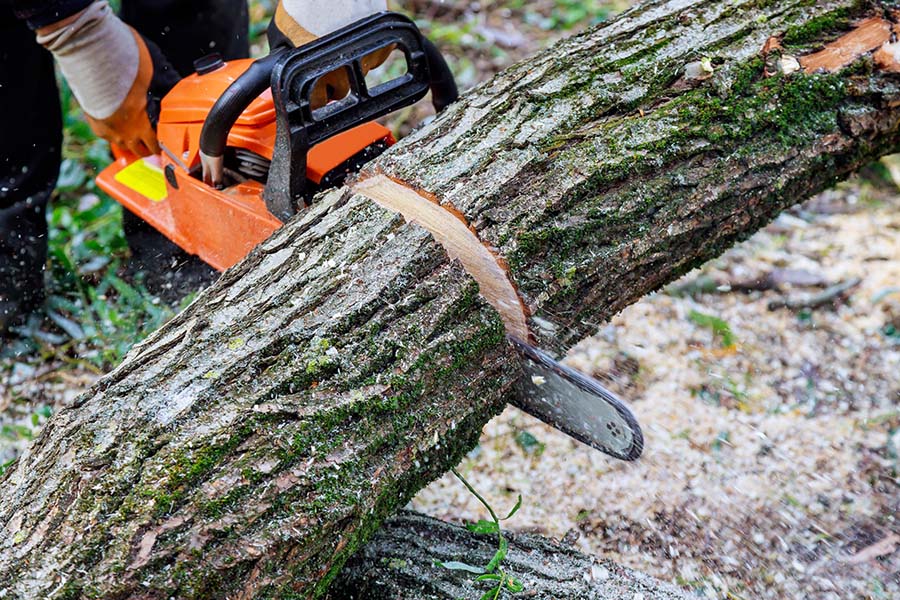
Two trees that look similar in a photo may sit in very different work areas. A tree near an open section of a yard presents different questions from one beside a house, fence, driveway, neighboring boundary, public street, or drainage feature. The point is not to calculate a price from a list of obstacles. It is to make sure the estimate acknowledges the actual property.
Before the estimate, note what can be observed without walking beneath hanging limbs or entering a damaged area:
- whether the tree is standing, leaning, split, fallen, or storm-damaged;
- whether the concern developed gradually or followed a specific event;
- where the tree stands in relation to structures, fences, vehicles, and access points;
- whether a road, driveway, entrance, or other route is blocked;
- whether branches or the trunk are near a line, public right-of-way, or neighboring property; and
- whether the request is for the tree alone or also raises questions about the stump and final site condition.
Photos from a safe location can help describe the request, but no photo is worth approaching a downed line, suspended branch, unstable trunk, or damaged structure. Measurements are also unnecessary when they cannot be taken safely. An estimate can identify what additional information is required.
Cost Guide 04
Separate the Base Scope From Optional or Unconfirmed Work
A broad phrase such as “remove the tree” does not answer every buyer question. The proposal should distinguish the core removal scope from adjacent work that may or may not be available.
Ask whether the written proposal addresses:
- the exact tree and the intended removal result;
- access preparation or property constraints;
- cut material and debris after the work;
- stump grinding as a separate line item or exclusion;
- visible-root expectations, without assuming root removal;
- protection or restoration expectations for surfaces and landscaping;
- responsibility for municipal, utility, or property-boundary coordination; and
- the process for approving a scope change.
If stump work matters to the property plan, review the stump grinding cost guide before approving the removal estimate. It explains how to define stump depth, access, grindings, roots, and the expected finish without treating those items as automatic inclusions.
Cost Guide 05
How to Compare Tree Removal Estimates Fairly
The Texas Attorney General advises consumers to get more than one estimate, avoid pressure to sign immediately, research the contractor, and keep written records, especially after disasters. Its disaster scams guidance also recommends putting the total cost, work scope, schedule, payment terms, and expectations in writing.
Use a side-by-side comparison rather than choosing from the total alone:
| Compare this | Check for this |
|---|---|
| Scope | Same tree, same intended result, and the same adjacent tasks |
| Exclusions | Clear statements about stump work, debris, restoration, utilities, and public areas |
| Property constraints | Acknowledgment of access, structures, boundaries, and surfaces |
| Timing | Written scheduling terms instead of a guaranteed arrival assumption |
| Price | A total tied to a defined scope, plus a documented change process |
| Payment | Written payment stages and completion conditions |
| Provider claims | Current, verifiable support for any credential, insurance, or other qualification the provider cites |
Do not sign a document with blanks. Read the full agreement, make sure verbal promises appear in writing, and ask questions before accepting it. These consumer steps do not replace legal advice or an owner’s own insurance requirements.
Cost Guide 06
Emergency Requests Need a Safety-First Cost Conversation
Storm damage can add pressure to make a fast decision. Keep the order clear:
- Move people and pets away from unstable trees, suspended limbs, and downed lines.
- Call 911 when there is an immediate threat to life or public safety.
- Contact the correct utility when a line or utility-controlled area is involved.
- Describe the fallen tree, broken limb, damage, or blocked access from a safe location.
- Ask the written estimate to separate urgent access or hazard-related work from later removal, trimming, stump, or restoration decisions.
- Compare the proposed scope and payment terms without relying on pressure or an unwritten promise.
Fort Bend Tree Pros provides emergency response for fallen trees, broken limbs, storm damage, and blocked access, subject to confirmed coverage and scheduling. No round-the-clock schedule, same-day timing, or fixed arrival promise is stated.
Cost Guide 07
Prepare a Better Estimate Request
Before contacting a provider, create a short property note. Include the private service location, the visible condition, when it changed, what is nearby, what is blocked, and the outcome you want to discuss. Mention utility or public-right-of-way concerns at the beginning of the conversation.
Then ask for the proposal to identify the tree, the work, exclusions, timing, payment terms, and change process. This preparation will not produce a quote by itself, but it can reduce ambiguity and make competing proposals easier to evaluate.
For eligible properties in the Fort Bend County service territory, contact Fort Bend Tree Pros or call (281) 953-6277 to request an estimate. Coverage, scheduling, and the final written scope require confirmation.
Prepare Once, Compare Better
Prepare one property note before requesting estimates
Share the private service location, what you can observe safely, nearby property or access constraints, and the outcome you want to discuss. A written scope should define inclusions, exclusions, timing, and how changes are approved.
- Use one description for every estimate request.
- Photograph only from a safe location.
- Identify utility, public-area, and access concerns early.
- Compare the proposed result—not the total alone.
Prefer to call? (281) 953-6277
Common Questions
Estimate and pricing questions
Use these answers as a starting point, then confirm the exact property, responsibility, and written scope.
How much does tree removal cost in Fort Bend County?
Fort Bend Tree Pros does not publish an unverified average or price range. A written estimate should identify the exact tree, proposed removal scope, access and property constraints, utility or public-right-of-way issues, included and excluded tasks, scheduling terms, and how changes will be approved.
Is stump grinding included in a tree removal estimate?
Do not assume stump grinding is included. Ask the written estimate to state whether stump work is part of the proposal and to clarify grinding depth, visible-root expectations, grindings or debris, and the intended condition of the area afterward.
Can I get an exact tree removal quote from a photo?
A photo taken from a safe location can help explain the request, but it may not show access, boundaries, nearby structures, utilities, ground conditions, or every scope item. The provider should confirm what information and site review are needed before presenting a final written estimate.
Does emergency tree removal always cost more?
No universal emergency-price rule is stated here. The estimate should define the urgent condition, safe access, utility or public responsibility, the immediate work proposed, later work that is separate, scheduling terms, and the total tied to that scope.
What should I compare besides the total price?
Compare the exact tree and outcome, exclusions, access and property constraints, stump and debris terms, schedule, payment stages, change process, and support for any provider qualification that matters to you. A lower total is not a like-for-like comparison when the written scopes differ.
Request a Scope-Based Estimate
Request a Tree Removal Estimate Based on the Actual Property
Describe the visible concern and intended outcome. Fort Bend Tree Pros will confirm service-area coverage and whether more information or an on-site review is needed before the written scope and price are finalized.