Start Here
Fort Bend Tree Pros provides tree removal, tree trimming and pruning, stump grinding, and emergency tree service for eligible Rosenberg properties. The correct path depends on what is damaged or obstructed, where the tree stands, and whether the concern is on private property, in a public right-of-way, or near a utility line. Coverage and scheduling must be confirmed for the specific request.
Request an estimate or call (281) 953-6277 with the project location and a safe description of the problem.
Local Service Guidance
Locate the Tree Before Defining the Work
In Rosenberg, a tree near a sidewalk, curb, street, or other public space should not automatically be treated as an ordinary private-property assignment. The City of Rosenberg’s tree-trimming page explains that trees within the city right-of-way are trimmed as part of a city project and that affected residents receive notice. That municipal work must be distinguished from a private tree or branch concern.
The first question is therefore not “How much will it cost?” but “Who controls the area where the tree stands?” A useful location check separates four situations:
- Private property: discuss the requested removal, pruning, stump, or emergency scope with a tree-service provider.
- City right-of-way: use the city’s current guidance or reporting process before authorizing private work.
- Utility area or energized line: keep away and contact the property’s actual utility; call 911 when there is immediate danger.
- Unclear ownership or boundary: resolve responsibility before work is scheduled.
Fort Bend Tree Pros does not make legal boundary determinations, control municipal work, or provide utility-line service. This page also does not imply a Rosenberg office, storefront, crew base, travel time, or local project history.
Local Service Guidance
A Four-Path Guide for Rosenberg Tree Concerns
Rather than splitting the city into separate service pages, this hub owns all approved tree-service intent for Rosenberg at launch. Choose a path according to the object and condition involved.
Path 1: A Whole Tree May Need to Come Down
Start with tree removal in Fort Bend County when the whole tree is being considered for removal or has already fallen. A property owner may be reacting to a concerning lean, a split trunk, extensive storm damage, crown loss, or a tree that appears dead. These observations are reasons to seek appropriate assessment; they are not a diagnosis and do not prove that removal is always the only choice.
The estimate should identify the exact tree and its location relative to buildings, fences, gates, driveways, roads, public areas, and utility lines. Ask what is included and excluded. Cut-material handling, hauling, cleanup, equipment, and final site condition should not be assumed from the term “tree removal.” If those details affect the decision, have them written into the scope.
Path 2: Specific Limbs or Clearance Need Attention
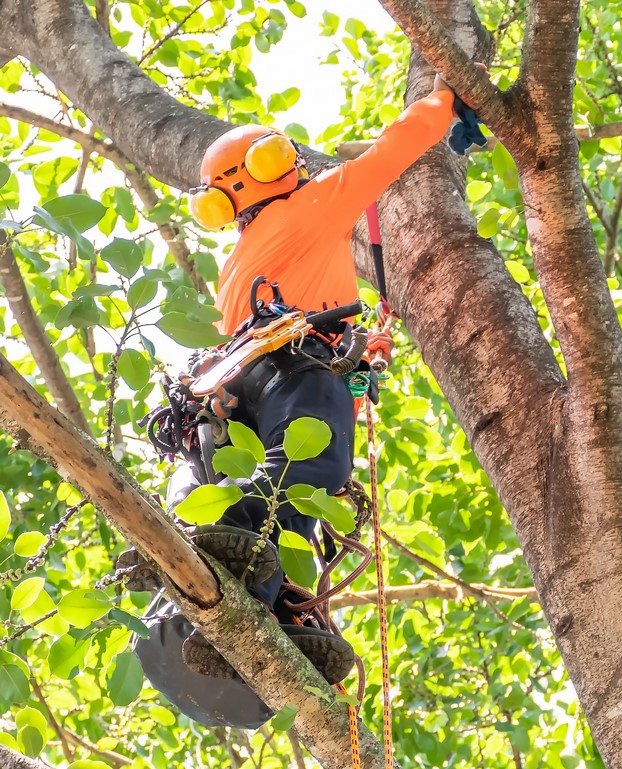
Choose tree trimming and pruning in Fort Bend County for broken or dead limbs, overgrowth, branch-clearance needs, or purposeful structural pruning. The request should identify which branches create the concern and what outcome is sought. This is more precise than asking for the entire canopy to be “cut back.”
Texas A&M Forest Service guidance says every pruning cut is a wound. That makes selective reasoning important: each cut should relate to dead material, structure, risk reduction, or necessary clearance rather than indiscriminate canopy removal. This is general tree-care guidance, not a diagnosis or a claim about a particular method used by Fort Bend Tree Pros.
If the branch is associated with a Rosenberg right-of-way, check the city’s current guidance before arranging private work. If it touches or threatens a line, the utility issue comes first.
Path 3: The Tree Is Gone but the Stump Remains
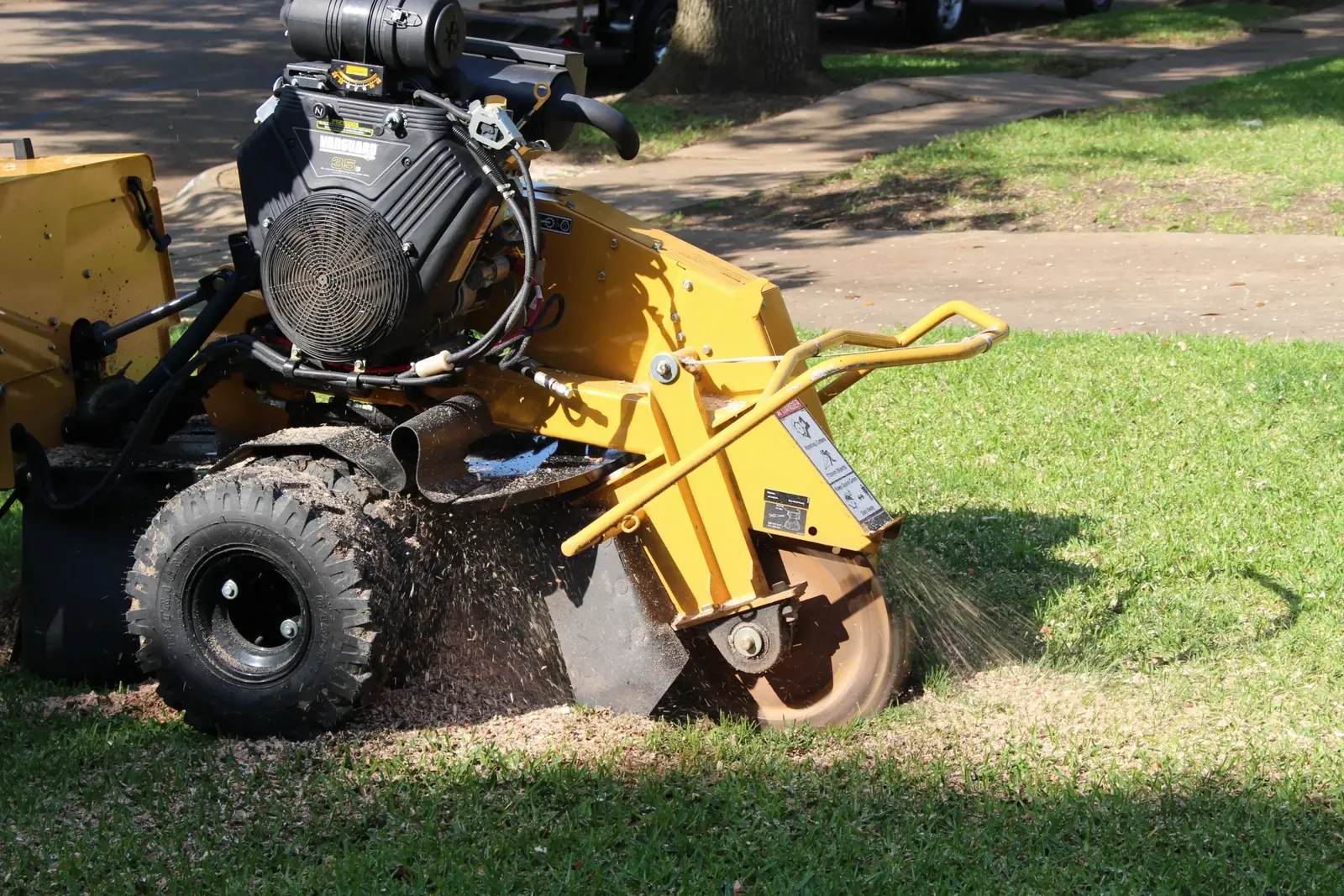
Use stump grinding in Fort Bend County when a remaining stump interferes with the intended use of the property or creates an unwanted obstacle. A clear request includes the stump’s approximate size, access route, nearby pavement or structures, visible roots, and the plan for the space after grinding.
Stump grinding does not automatically mean all roots will be removed or that a specific depth, debris removal, fill, grading, or lawn restoration is included. Ask the estimate to describe the proposed depth, visible-root scope, handling of grindings, exclusions, and expected surface condition. Those written details prevent assumptions from becoming disagreements later.
Path 4: Storm Damage or an Obstruction Needs Prompt Attention
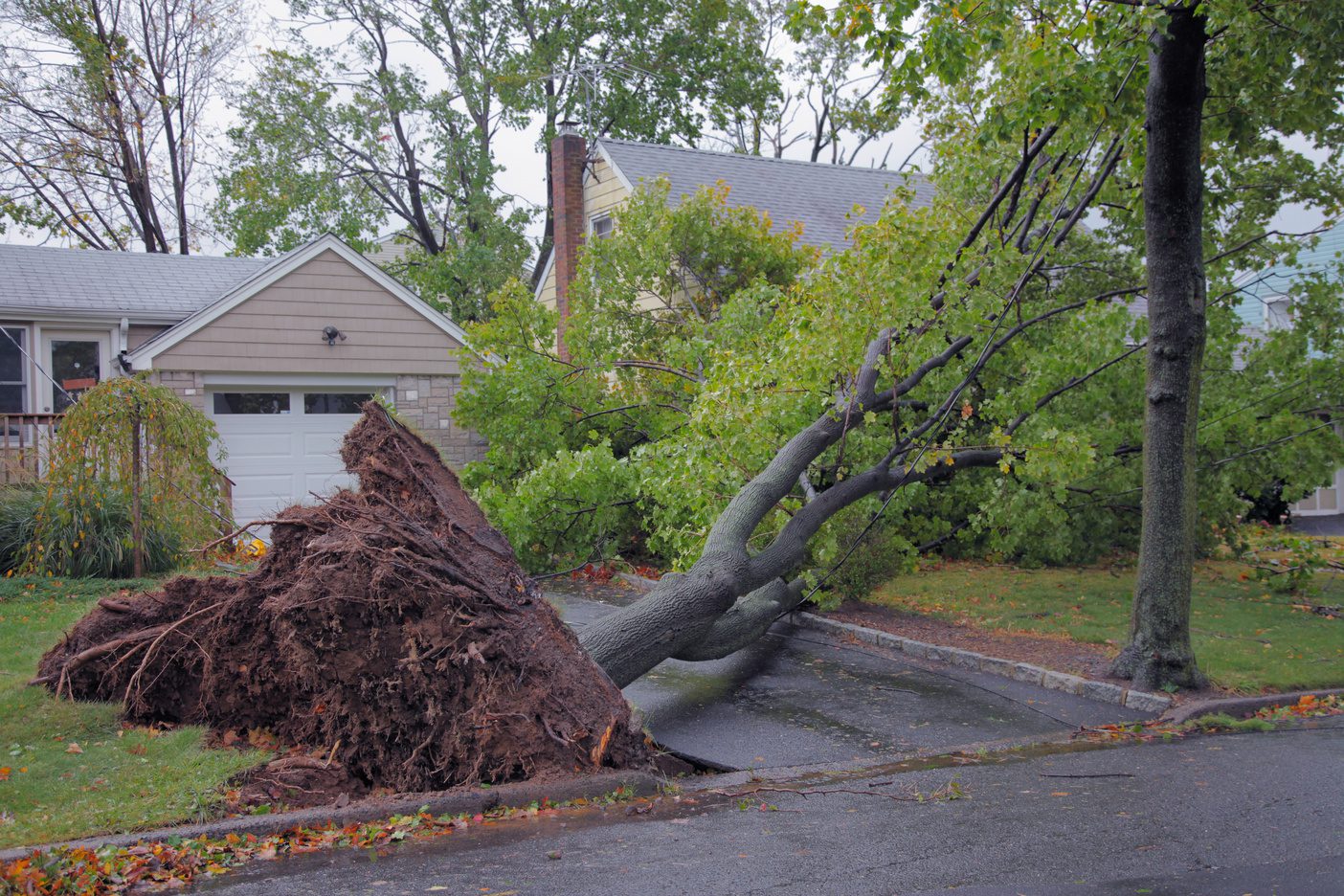
Open the emergency tree service page for a fallen tree, broken limb, storm damage, or blocked access. Emergency describes the situation, not a promise that service is available at every hour or within a fixed response window. Location, service fit, and scheduling must be confirmed.
Do not approach a downed line, a tree touching a line, a suspended limb, or an unstable trunk to take photographs. Keep people and pets away. Contact 911 for immediate danger and the property’s actual utility for electrical hazards. Public road or right-of-way obstructions may also need to be reported to the city. A private-property estimate can be discussed once authority and immediate safety are clear.
Local Service Guidance
What Changed: A Better Way to Explain the Problem
The initial call is more useful when it describes change over time. Safe observations can help distinguish a planned request from an urgent obstruction:
| Observation | What it helps clarify | What it does not prove |
|---|---|---|
| Limb broke during a storm | Emergency or pruning may be the starting point | That the whole tree must be removed |
| Tree is leaning more than before | Timely assessment may be appropriate | The cause or exact risk level |
| Canopy has extensive visible loss | Removal or storm evaluation may need discussion | A tree-health diagnosis |
| Branches obstruct access or visibility | A defined clearance request may fit trimming | Who owns a public right-of-way tree |
| Stump blocks a planned-use area | Grinding scope and finish expectations should be discussed | That roots will be completely removed |
| Tree or branch is near a line | The utility may need to act first | That private utility-line work is appropriate |
A photograph can support the description only when it can be taken from a safe location. Do not cross a barrier, stand beneath damaged limbs, or move closer to a downed line for a better image.
Local Service Guidance
After the Immediate Hazard, Avoid a Rushed Tree Decision
Storm cleanup often combines two decisions that should be separated. The first is how to keep people away from a dangerous area and restore safe access. The second is whether the remaining tree should be kept, monitored, pruned, or removed.
Texas A&M Forest Service storm guidance warns that hasty decisions can lead to removal of trees that might be saved. Its decision framework considers the tree’s health, structural damage, crown loss, wounds, remaining branches, and location. Fort Bend Tree Pros does not advertise disease diagnosis or treatment. The service request should focus on the observable condition and the removal, pruning, stump, or emergency scope being considered.
A split trunk or major crown loss deserves serious attention, but text and photos cannot settle every question. Do not remain beneath damaged limbs while waiting for guidance. Secure the area, route public and utility hazards correctly, and arrange the appropriate next evaluation.
Local Service Guidance
Build the Estimate Around the Site
A Rosenberg estimate request should describe the site as well as the tree. Include the property location privately and note:
- the exact tree, branch, or stump involved;
- whether the condition followed a storm or developed over time;
- nearby buildings, fences, gates, driveways, sidewalks, streets, and property boundaries;
- whether city right-of-way or utility responsibility may apply;
- what access is available to the work area;
- the result being requested; and
- the details that need to appear in writing, including exclusions, material handling, stump depth, roots, or surface condition where relevant.
When reviewing the proposal, check that the total scope, schedule, payment terms, and process for changes are clear. If comparing estimates, confirm they address the same tree and the same outcome. One proposal may appear lower because it excludes an item included elsewhere. The written scope makes that difference visible.
Local Service Guidance
Connect to the Right Fort Bend County Page
Rosenberg property owners can browse the service-area directory for the countywide coverage framework or the services overview to compare the four categories. Nearby launch hubs include tree service in Richmond, tree service in Sugar Land, and Katy tree service within the Fort Bend County territory.
These city pages are separate local guides, not office pages. They do not authorize a service-and-city matrix. Removal, trimming, stump grinding, and emergency intent for Rosenberg remains consolidated here at launch.
Local Service Guidance
Request a Rosenberg Tree Service Estimate
When the concern is on eligible private property and fits one of the four verified services, request an estimate or call (281) 953-6277. Share the location, observable condition, access issues, and any city-right-of-way or utility context. Coverage, scheduling, and the written scope must be confirmed before work is assumed.
Common Questions
Fort Bend County tree-service answers
Frequently Asked Questions
Does the City of Rosenberg trim trees in the public right-of-way?
Rosenberg says trees within the city right-of-way are trimmed as part of a city project and that affected residents receive notice. Check the city’s current guidance for the specific location. Private-property work should be scoped separately, and Fort Bend Tree Pros does not control municipal work.
Which services are available for Rosenberg properties?
Available categories for an eligible Rosenberg property are whole-tree removal, focused trimming and pruning, stump grinding, and storm-related help when a tree falls, a limb breaks, or access is obstructed. Fort Bend Tree Pros checks the location, request type, and schedule before arrangements are made.
Is a photograph enough to decide whether a tree should be removed?
No. A photograph can help describe visible conditions, but it cannot establish every structural, health, site, or ownership factor. Keep away from unsafe areas and seek an appropriate assessment before deciding whether the tree should be pruned, monitored, or removed.
What if a fallen limb blocks a street or public access in Rosenberg?
Report a public hazard to the appropriate city or emergency authority and keep away from utility lines or suspended limbs. A separate private-property tree-service scope can be discussed after immediate safety and responsibility are clarified.
What details belong in a stump grinding scope?
The written scope should identify the stump, access route, proposed grinding depth, visible-root treatment, handling of grindings or debris, exclusions, and expected condition of the area afterward. Do not assume complete root removal or restoration unless it is stated.